
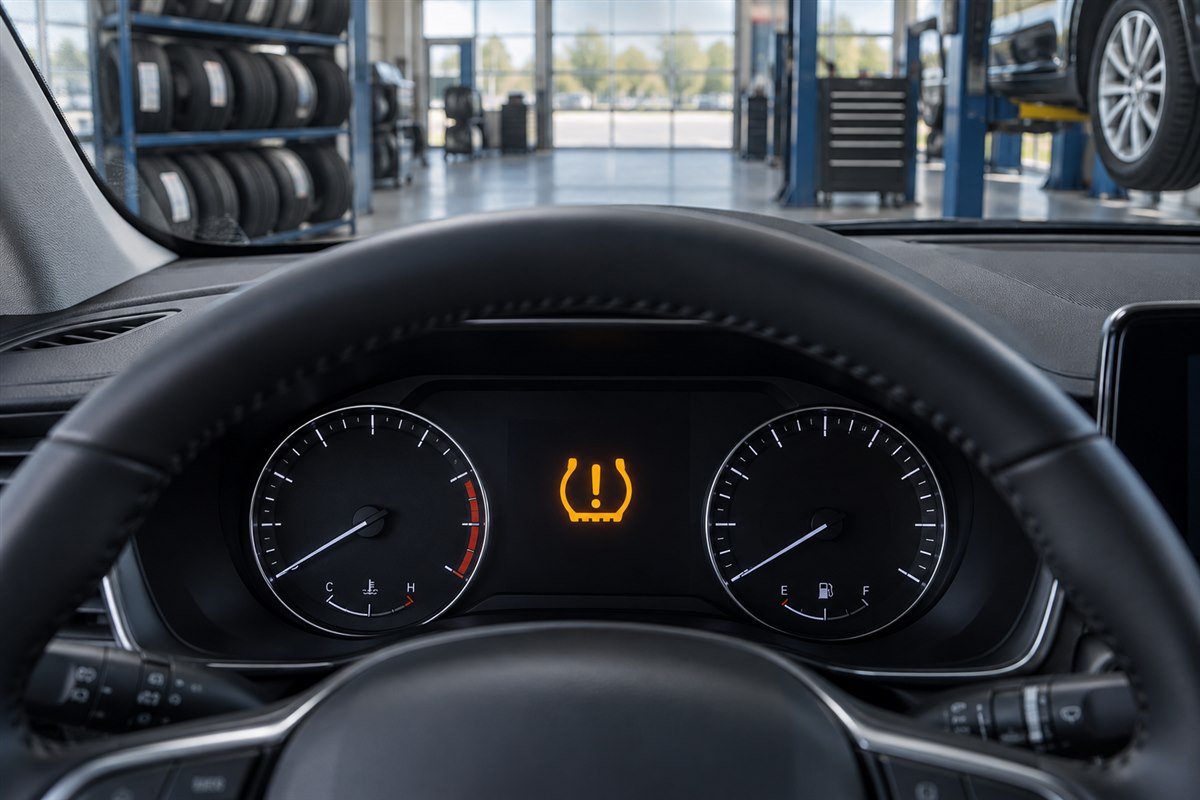
If the light stays on
Park in a safe place and inspect all tires. A tire can be dangerously low without looking flat, so measure each one with a gauge and compare it with the cold PSI on the vehicle placard.
If a tire is very low, damaged, bulging, or losing air quickly, do not continue normal driving. Arrange a professional inspection or safe roadside assistance.
- Check all four tires, not only the one that looks lowest.
- Use the driver-door PSI, not the sidewall maximum.
- Look for nails, cuts, bulges, and valve damage.
Why it may appear on a cold morning
Lower outdoor temperature can reduce tire pressure enough to trigger the warning. The light may turn off after the tires warm, but the pressure should still be measured and corrected when the tires are cold.
Do not add extra pressure simply to keep the light off. Set the tires to the vehicle maker's specification.
If the light flashes
Many vehicles use a flashing TPMS light at startup, followed by a solid light, to indicate that the system may not be working correctly. A damaged sensor, sensor battery, wheel change, or missing relearn procedure can be involved.
Because behavior varies by vehicle, check the owner manual and have the system diagnosed. Until it is repaired, verify tire pressure manually on a regular schedule.
What to do now
- Move to a safe place and inspect every tire
- Measure cold pressure against the vehicle placard
- Do not drive normally on visible damage or rapid pressure loss
- If the light flashes, check the manual and arrange diagnosis

