Start with tread and wear bars
Main tread grooves normally include wear bars. When the tread approaches those raised bars, wet grip and water evacuation are reduced and the tire should be inspected for replacement.
Wear concentrated on an inside edge, outside edge, or one area can also point to inflation, rotation, or alignment issues.
Conditions that should not be ignored
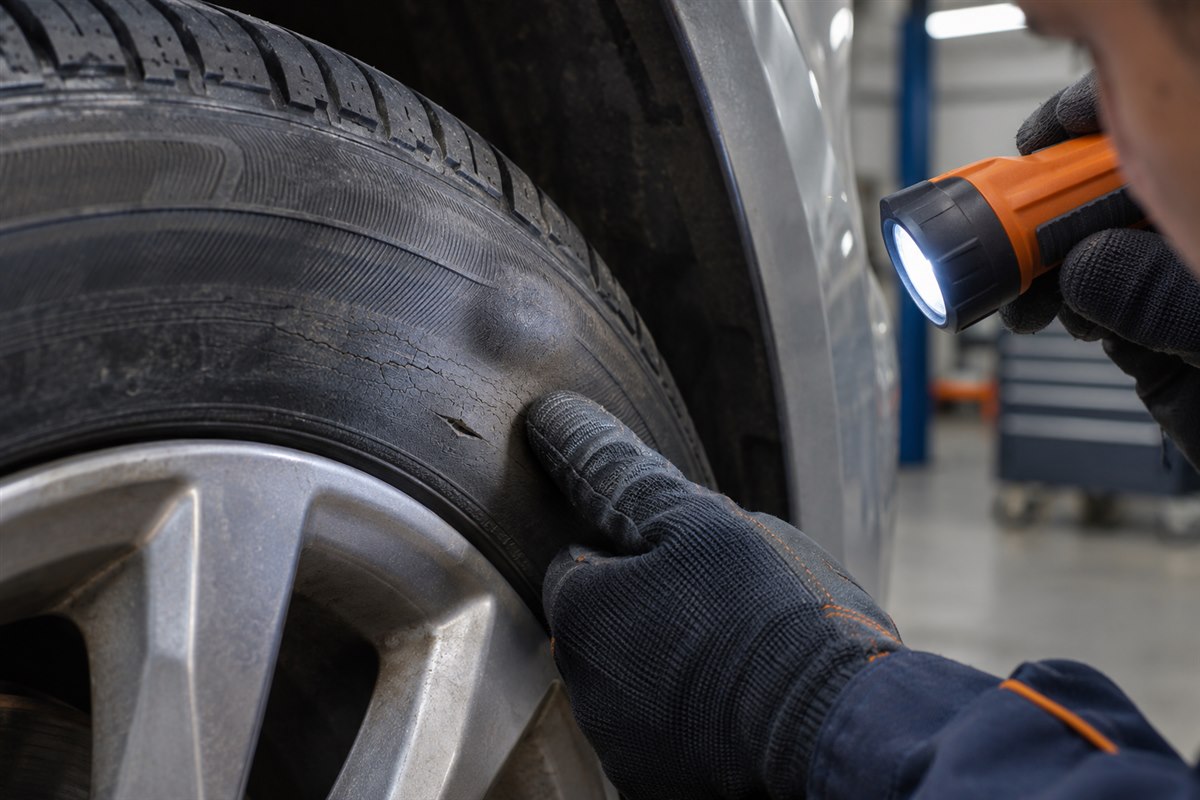
A sidewall bulge, deep cut, exposed cord, repeated pressure loss, or a severe impact may affect structural safety. New vibration, pulling, or noise should also be checked promptly.
- A bulge or deep sidewall cut
- Visible cords
- Repeated pressure loss after inflation
- A hard pothole or curb impact
- New, persistent vibration or pulling
Age is only one factor
Rubber changes with time, sunlight, heat, and storage even when tread remains. The DOT code on the sidewall can help identify production date.
Inspection and replacement guidance varies by vehicle and tire manufacturer, so use the owner's manual and tire maker guidance rather than one universal year limit.
Quick monthly check
- Check pressure when tires are cold
- Look for even tread wear
- Inspect sidewalls for damage or objects
- Notice new vibration, pulling, or repeated air loss