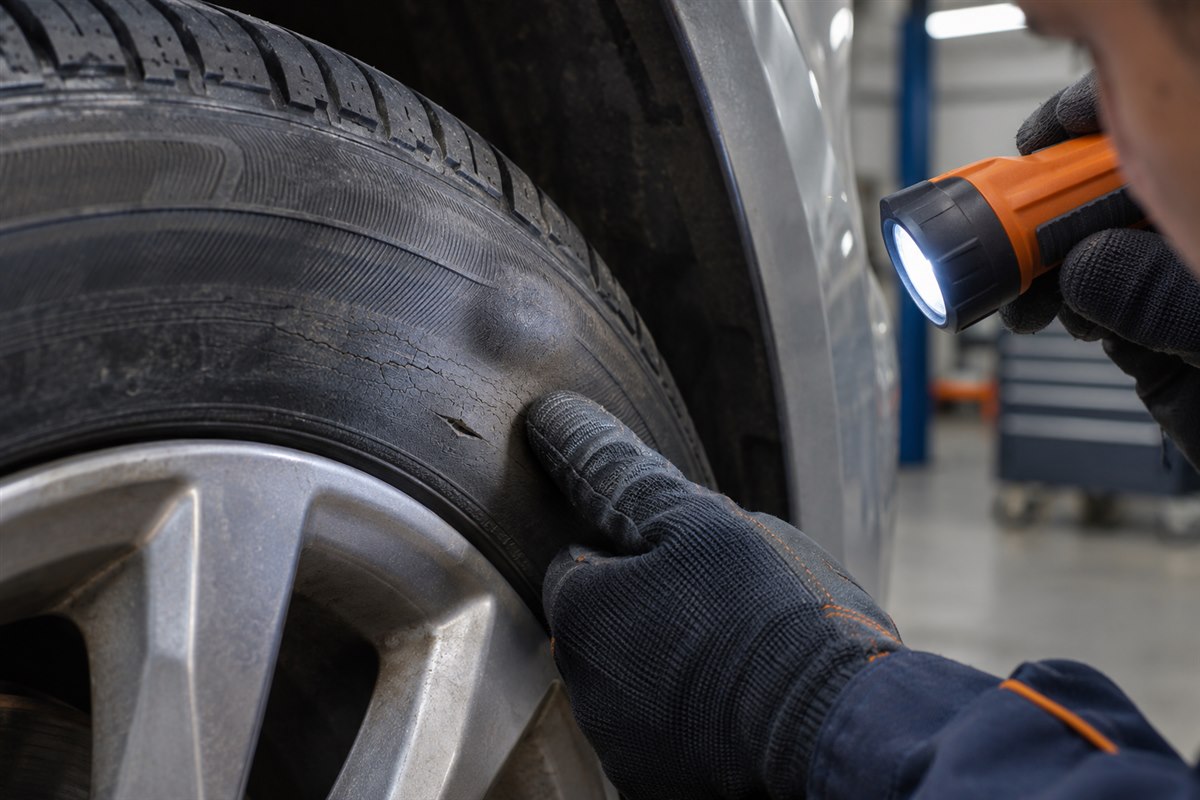
Outward bulges are different from normal indentations
An outward sidewall bulge can indicate damaged internal cords, often after a pothole, curb impact, or driving underinflated. That damage can lead to sudden failure and should not be driven at freeway speed or for a long distance.
Radial tires may show a shallow inward indentation where body plies overlap. That appearance is different from an outward bubble. If the direction or shape is unclear, do not test it by pressing or deflating the tire; have a tire professional inspect it.
Cracks and cuts depend on depth and extent
Fine surface checking can develop with age, sunlight, and environmental exposure, but widespread, deepening, or spreading cracks need professional evaluation. USTMA recommends checking the tread and sidewalls during the monthly pressure inspection.
A cut, scrape, or impact that exposes body cords or wire, or comes with pressure loss, distortion, or vibration, is a reason to remove the tire from service. An outside view cannot show all inner-liner or cord damage.
Do not keep driving with these warning signs
Slow smoothly and stop in a safe location for a bulge, exposed cords, a deep sidewall cut, obvious distortion, or fast pressure loss. Do not drive at highway speed to reach a shop, and do not treat sealant or an outside plug as a structural sidewall repair.
On a narrow freeway shoulder or another dangerous location, protect people first and call roadside assistance. Use a spare only when the stopping area is safe and the spare is undamaged and properly inflated.
- An outward bubble or local distortion
- A cut or crack exposing body material
- Repeated or rapid pressure loss
- New vibration, pulling, or noise after an impact
- Sidewall damage together with a bent wheel
Perform a monthly and pre-trip inspection
Check cold pressure in all tires and the spare, then look around the tread, shoulders, and both sidewalls. The inner sidewall is harder to see from outside, so a severe impact may justify a lift inspection.
Record when the damage appeared and whether the tire was driven while low. A professional may need to demount the tire to inspect the inner liner, bead, and cords; an exterior photo is not a complete inspection.
Sidewall safety checklist
- Look for outward bulges, deep cracks, and cuts
- Check for exposed cords, wire, or inner material
- Measure cold pressure and watch for continuing loss
- Recall recent pothole, curb, or low-pressure driving
- Avoid highway driving and seek inspection when uncertain