Stop safely and leave the object in place
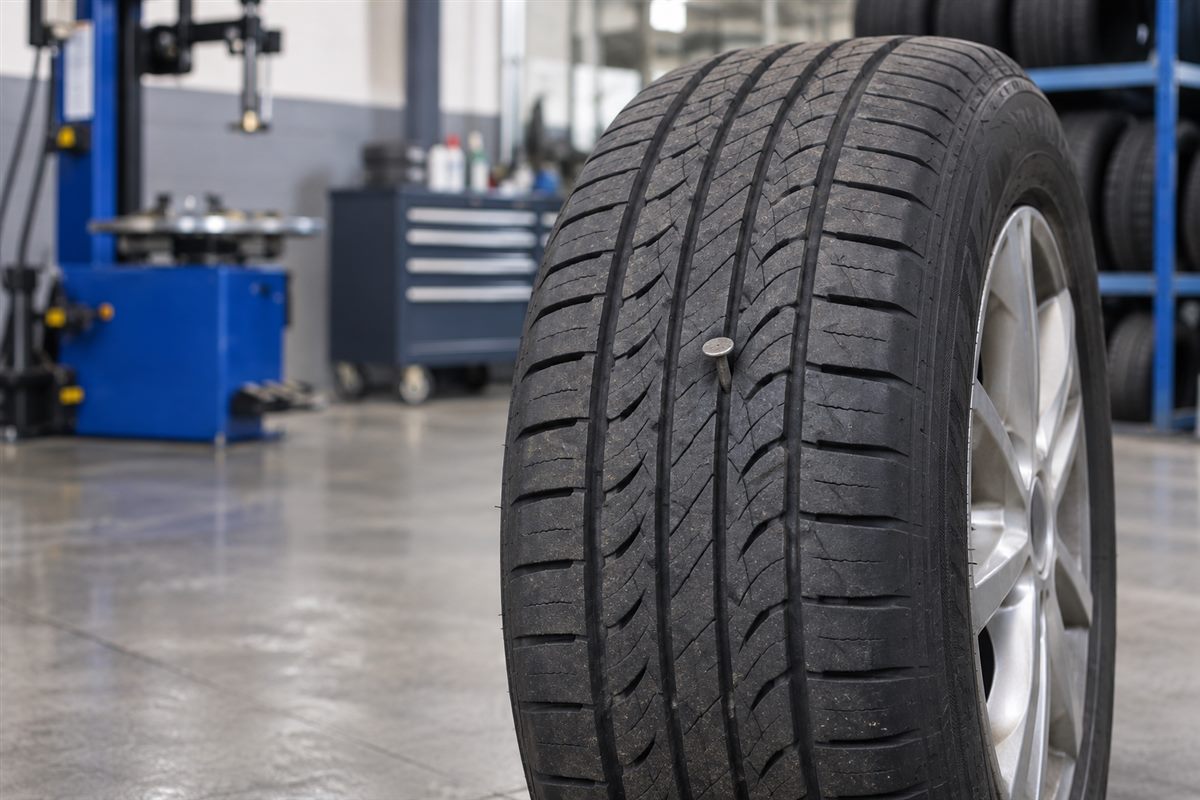
If pressure drops, the TPMS light comes on, or you see an object in the tire, slow smoothly and stop in a safe location. Pulling out a nail can make the leak faster.
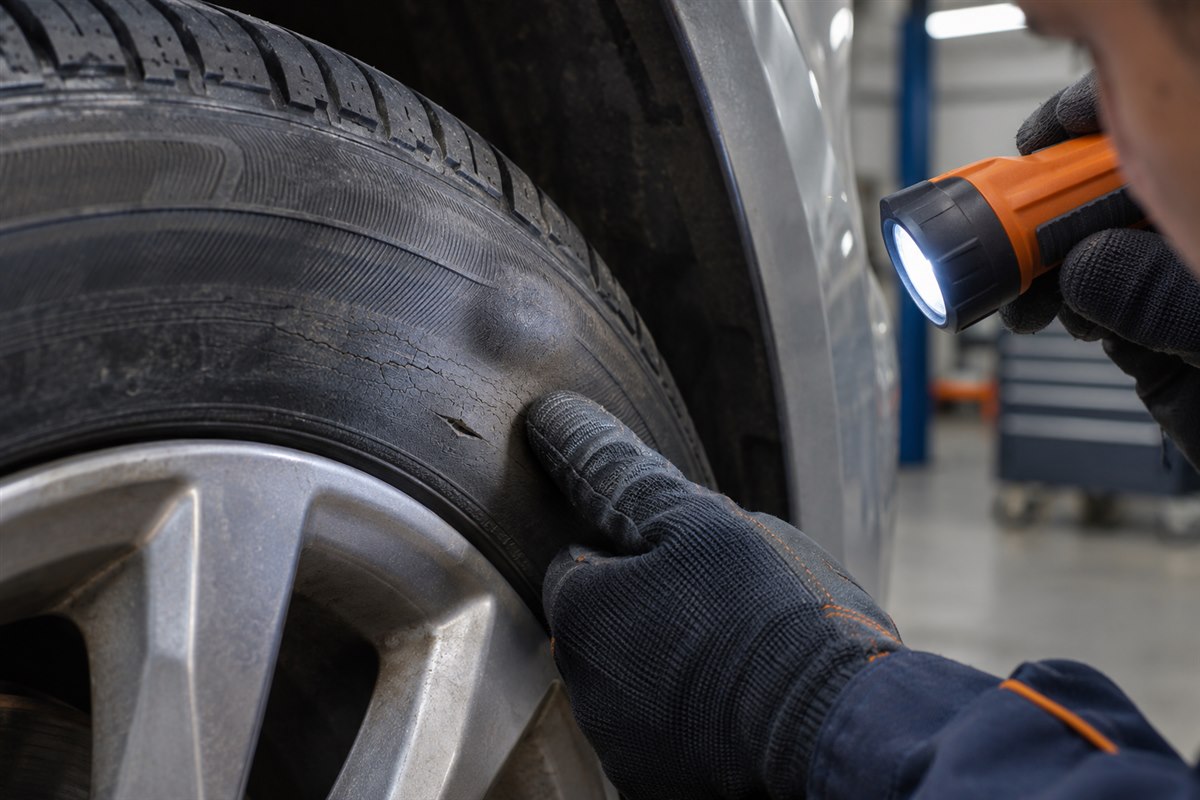
Do not keep driving at freeway speed if pressure is dropping quickly, the sidewall is distorted, the vehicle pulls, or vibration is severe. Use roadside assistance or the spare only when the stopping location is safe.
Location and size determine the basic repair zone
Industry repair procedures generally limit repairs to the tread area and punctures no larger than about 1/4 inch, or 6 mm. The flexing shoulder and sidewall are not treated like an ordinary tread puncture.
A small outside hole can hide damaged cords, moisture, or evidence of driving while underinflated. An exterior leak check alone cannot establish that the tire is safe to repair.
- Small puncture in the central tread: may be repairable after inspection
- Shoulder or sidewall puncture: generally outside the repairable area
- Puncture larger than about 6 mm: outside the normal repair limit
- Bulge, deep cut, or exposed cords: stop using the tire
A proper repair requires tire removal
The tire should come off the wheel so a technician can inspect the inner liner, cords, bead, and signs of damage from low-pressure driving. A plug inserted from the outside cannot reveal internal damage.
A proper repair seals both the injury channel and the inner liner, commonly with a repair stem and patch combination. A plug alone or a patch alone does not address both parts of the injury.
Some tires and prior damage need extra review
Run-flat tires, tires with acoustic foam, or vehicles with special requirements may have additional limits. A previous improper repair, closely spaced injuries, extended underinflated driving, or impact damage can make a tire unsuitable for repair.
After repair, the tire still needs inflation, leak testing, installation, and balancing. Set cold pressure from the driver-door placard; simply adding air is not a completed repair.
Before the shop inspection
- Note the TPMS warning and how quickly pressure drops
- Do not remove an object still lodged in the tire
- Tell the shop if the tire was driven while low
- Identify whether damage is on tread, shoulder, or sidewall
- Ask for removal, internal inspection, and the repair method